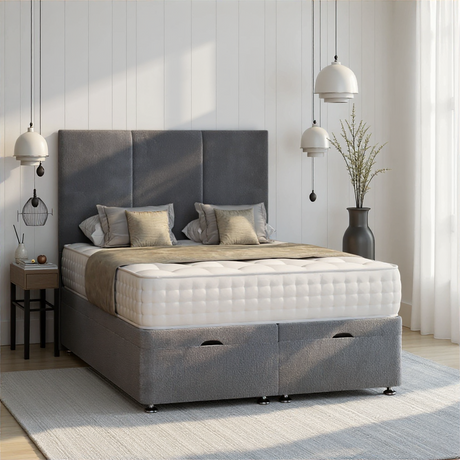
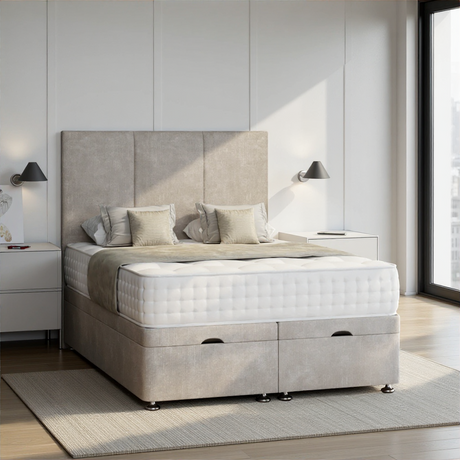
Most of the advice about sleeping better comes back to the same point. How you feel during the day has a great deal to do with how you slept the night before. The bit that gets less attention is that how you slept has a great deal to do with the position your body was held in for seven or eight hours, and that position is set by two things you chose a while ago: the mattress and the base underneath it.
That is what sleep posture means. It is the line your spine holds while you are asleep, and it is the one posture you cannot correct yourself, because you are not awake to do it. The bed does it for you, well or badly.
The short version
Find your sleeping position, note the feel, and jump to that section or go straight to the mattresses that match.
| Position | Recommended feel | Shop |
|---|---|---|
| Side sleepers | Medium Soft to Medium Firm | Shop mattresses |
| Back sleepers | Medium to Firm | Shop mattresses |
| Front sleepers | Medium Firm to Extra Firm | Shop mattresses |
| Sharing a bed | Medium to Firm, pocket sprung | Shop pocket sprung |
Whichever you choose, it needs a flat, firm base under it. Every divan base we make has a solid platform top. Or read on for why the base matters, the morning signs and a test you can do at home.
What Good Sleep Posture Looks Like
Stand up straight and your spine holds a gentle S shape. A slight curve in at the neck, out across the upper back, in again at the lower back. That is its resting shape, and it is the shape your muscles work least to hold.
Good sleep posture is that same shape, lying down. On your side, it means a straight line from the top of your head through your neck and down your spine, with your hips level and not twisted. On your back, it means the curve at the small of your back is supported rather than left hanging over a gap. In both cases the muscles along the spine get to switch off, which is the whole point of lying down.
Poor sleep posture is any version where the spine is bent out of that line and held there. A shoulder jammed up towards the ear. Hips sunk lower than the chest. A neck propped at an angle for hours. None of those hurt at the time, because you are asleep. They tend to announce themselves at about seven in the morning.
Two Layers, One Job
People talk about the mattress as though it does all the work, and most guides stop there. In practice your posture overnight comes from the mattress and the base acting together, and if either one is wrong the other cannot make up for it.
Layer one
The mattress shapes you
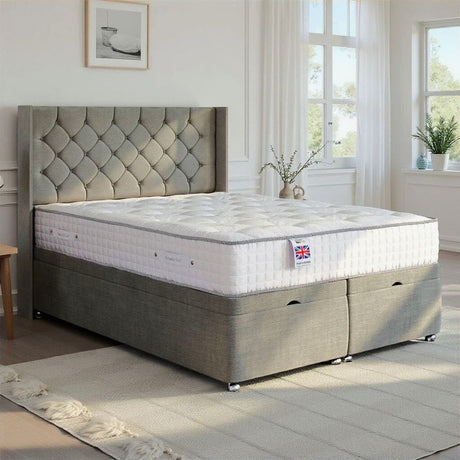
The mattress is the layer that has to give in the right places and hold in the others. On your side, your shoulder and hip stick out further than your waist, so they need to sink in while the waist is held up. On your back, the hips and shoulders need to sit level while the lower back is filled in. A mattress that does this well is one that follows your outline, which is why pocket sprung and memory foam constructions tend to do a better job than a single flat surface pushing back evenly.
We covered how to pick the right firmness for your sleeping position and body weight in our guide to mattress firmness for back support, so this piece will not repeat it. The short version is that the firmest option is rarely the answer, and the right feel depends on how far you sink in, not on a number on a swing tag.
Layer two
The base holds the mattress true
Here is the layer that gets forgotten. A mattress can only follow your outline accurately if it is lying on something flat, firm and even. Put a good mattress on a base that has softened in the middle, or on slats with wide gaps, and the mattress follows those faults. Within a year or so it has soft lines where the base lets it drop, and you are no longer sleeping on the firmness you chose. You are sleeping on a dip, and your hips go into it every night.
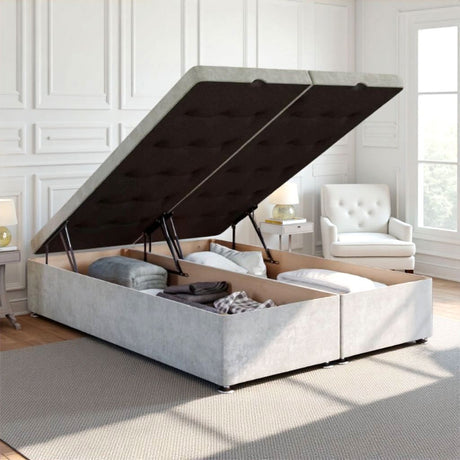
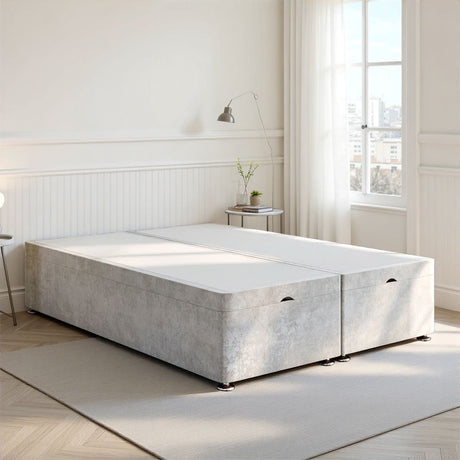
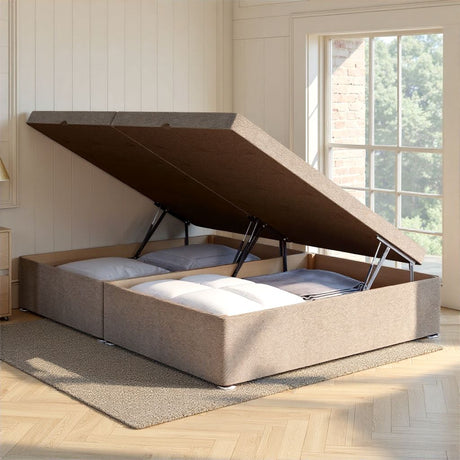
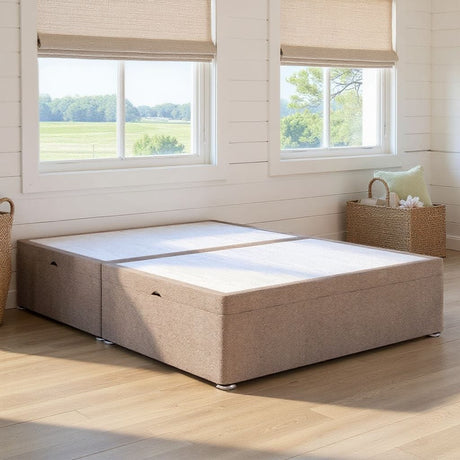
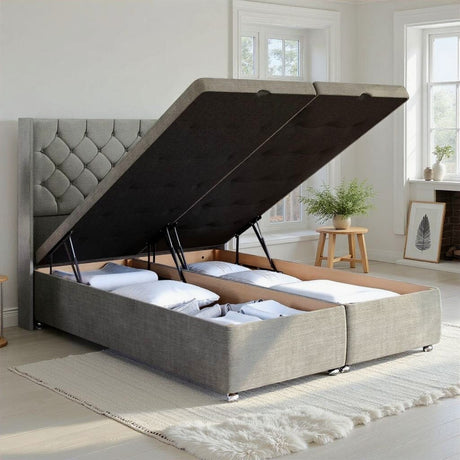
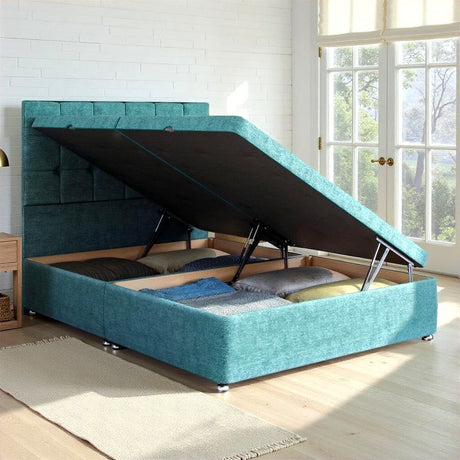
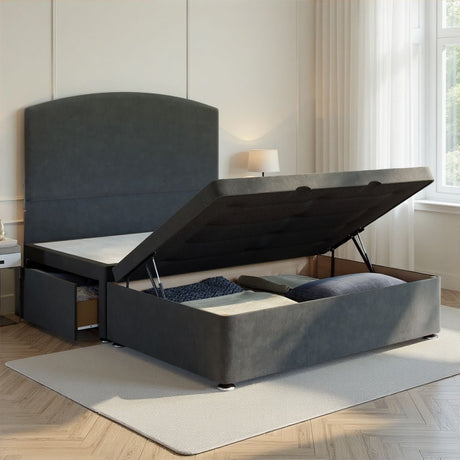
Every base we build has a solid platform top, a continuous rigid deck across the whole frame. There is nothing underneath the mattress that can settle unevenly, so the support is the same at the edge as it is in the middle, and the same in year five as it was in week one. The give in the bed all comes from the mattress, which is the layer you can rotate and replace. That is the right way round.
If you are not sure what you are sleeping on, take the mattress off and look. A base with a sprung top, or one that has gone soft in the middle, is quietly undoing whatever the mattress is trying to do above it.
The Posture You Sleep In
Your sleeping position decides which parts of you need the most give, so it is worth being honest about which one you actually use rather than the one you fall asleep in.

Side sleepers
The most common position and the one that asks the most of the mattress. The shoulder and hip need to sink enough for the spine to run straight between them. The pillow matters as much here, because it has to fill the gap between your ear and the mattress so the neck stays in line with the rest of the spine. A pillow that is too thin lets the head drop, and a pillow that is too thick pushes it up. Either one puts a bend in the neck for the night.
Recommended feel: Medium Soft to Medium Firm

Medium suits most side sleepers. Go to Medium Firm if you are heavier or like to feel held up rather than cradled, and Medium Soft only if you are a lighter build and find Medium too hard. No softer than that or the hips drop through.

Back sleepers
Generally the easiest position to support, because weight is spread across the whole length of you. The job is to keep the lower back supported and the head low enough that the chin is not pushed towards the chest. A thinner pillow usually suits a back sleeper better than a thick one.
Recommended feel: Medium to Firm

Medium Firm is the sweet spot for most back sleepers. Medium works if you are lighter, Firm if you are heavier or wake with the lower back feeling unsupported.

Front sleepers
The hardest on the lower back and the neck, because the hips sink first and the head has to turn to one side to breathe. If it is the only way you can get to sleep, a firmer mattress and a very flat pillow, or none at all, limit how far the spine arches. A small pillow under the hips can help too.
Recommended feel: Medium Firm to Extra Firm

Front sleeping needs the hips held up, so this is the one position where the firm end of the range is the right call. Medium Firm is the softest worth considering.

Sharing a bed
Two people rarely need the same thing. If one of you is heavier, or one sleeps on their side and the other on their back, a pocket sprung mattress on a solid base handles it best. Each spring responds to the weight directly above it, so one side can sink without dragging the other side with it.
Recommended feel: Medium to Firm

Pocket sprung, 1000 springs or more. The middle of the range leaves room for two different builds and positions on one mattress, and the pocket springs let each side sink to its own weight.
How to Check Your Own Sleep Posture
You cannot watch yourself sleep, but you can read the signs in the morning, and they are fairly consistent.
Morning signs
Stiff, then fine within twenty minutes. Usually means the bed is holding you slightly out of line overnight. The muscles have been working, and they let go once you move about.
Sore shoulder or hip on the side you sleep on. Generally points to a mattress that is too firm for you, or a base that has lost its give in the wrong direction and left the mattress with nowhere to go.
Tight lower back after sleeping on your back. Often the gap at the small of the back being left unsupported, which can be the mattress, the base, or both.
Try this at home
Lie on your side on the bed, as you normally would, and have someone look at your spine from behind. It should run straight from neck to hips. If it dips in the middle, the bed is too soft for you or the base has gone. If it bows upwards over the hip, the bed is too firm.
A persistent ache deserves a proper look from a GP or physiotherapist. The bed is one part of the picture and it works best alongside good advice, not instead of it.
Where to Start
If the mattress is fine but you suspect the base, start there. A solid platform top base under your current mattress will often bring back the support you thought you had lost. Every divan base we make is built that way, with storage or without.
If the mattress is the issue, or you are replacing both, choose by sleeping position and construction first and firmness second. Our guide to the best mattresses for 2026 walks through every construction we make and who each one suits. You can browse the full mattress range by feel and type, and every one of them is medi-endorsed.
Shop Divan Bases Shop Mattresses
Whichever way round you do it, Complimentary Two-Man Delivery brings it to the room you want it in within 3 to 10 working days, and the team will carry it up the stairs so you are not starting a new bed with a bad back.