By Divan Base Direct. 17 years in the UK bed industry. Medi-Endorsed, British-made beds.
Quick summary
- The best mattress for back pain for most people is medium-firm, not the firmest one on the shelf. That surprises people, but it's what the clinical evidence shows.
- The right firmness depends on your weight, your sleeping position, and the type of back pain. Not the price.
- An orthopaedic mattress means stronger support and spinal alignment. It does not have to mean rock-hard.
- A mattress is one part of the answer. For persistent or severe back pain, see your GP. The NHS advice is to stay active and get it assessed.
What the evidence actually says about mattresses and back pain
There's a stubborn myth that the firmer the mattress, the better it is for your back. The research doesn't support it.
The landmark study is a randomised, double-blind controlled trial published in The Lancet (Kovacs et al., 2003). It compared firm mattresses with medium-firm ones in people with chronic, non-specific lower back pain. The medium-firm group reported less pain in bed, less pain on rising, and less disability than those on firm mattresses. A 2021 review of the wider literature reached the same conclusion: a medium-firm mattress tends to deliver the best balance of comfort, sleep quality and spinal alignment.
Why? Because support and firmness aren't the same thing. A mattress that's too firm doesn't yield at the hips and shoulders, so your spine is pushed out of its natural alignment and pressure builds at those contact points. A mattress that's too soft lets your hips sink, hammocking the lower back. The sweet spot is a surface that holds your spine level while still cushioning the pressure points, and for most adults that's medium-firm.
So when people search for the best mattress for lower back pain, the honest answer is this: supportive enough to keep your spine aligned, forgiving enough to relieve pressure. For most adults, that means medium-firm.
What is an orthopaedic mattress?
"Orthopaedic" isn't a regulated term, so it's worth being clear about what it actually means. An orthopaedic mattress is one built to provide firmer, more even support that helps keep the spine in healthy alignment, typically with a higher-density core, reinforced springs, or supportive foam layers.
The common misconception is that orthopaedic equals as hard as possible. It doesn't. A good orthopaedic mattress provides structured support, firm where you need stability, with enough surface comfort to relieve pressure. Our orthopaedic mattress range sits at the firmer, more supportive end of the scale, which suits back sleepers, heavier sleepers, and people with chronic lower back pain. Even so, firmer still means correctly supportive, not punishingly hard.
If you're not sure whether you need orthopaedic-level firmness, the firmness guide below will help you place yourself.
Choosing firmness by sleeping position and weight
There's no single best mattress. There's the right one for your body. Two factors decide it: how heavy you are, and how you sleep.
By body weight
- Lighter sleepers (under about 60kg) don't press far into a mattress, so a firm surface can feel like sleeping on a board and create pressure at the shoulders and hips. Softer to medium usually suits better.
- Average-build adults are best served by medium to medium-firm, the most common right answer, and the range the back-pain evidence points to.
- Heavier sleepers (over about 95kg) compress a mattress more and need firmer support to stop the hips sinking and the spine bowing. This is where firmer orthopaedic builds earn their place.
By sleeping position
- Side sleepers need more give at the hips and shoulders to keep the spine straight. Medium to medium-firm, ideally with a pressure-relieving comfort layer such as memory foam.
- Back sleepers need uniform support that holds the natural curve of the lower back. Medium-firm to firm.
- Front (stomach) sleepers need a firmer surface to stop the lower back arching. Firm to orthopaedic. If you have back pain, it's worth trying to move away from front sleeping, as it strains the lumbar spine.
The brief firmness map for back pain
- Soft to medium: lighter and side sleepers, shoulder or hip pressure issues.
- Medium to firm: the evidence-backed default for most adults with lower back pain. Explore the full mattress collection.
- Firm to orthopaedic: heavier sleepers, back and front sleepers, chronic lower back pain needing extra stability. See the orthopaedic range.
Which mattress type is best for back pain?
Firmness is the headline, but construction matters too. The main types each handle back pain differently.
- Pocket sprung. Individual springs move independently, supporting the body zone by zone and keeping the spine level. Excellent for support and for couples, because movement doesn't transfer across the bed. Browse pocket sprung mattresses.
- Memory foam. Moulds to your shape and excels at pressure relief around the hips and shoulders, which helps side sleepers and anyone with pressure-point pain. See memory foam.
- Hybrid and cooling gel. Combines a supportive spring core with comfort foams, often with better temperature regulation if foam runs too warm for you. See gel and hybrid options.
- Orthopaedic. The firmer, support-led builds covered above, for those who need maximum stability. See the orthopaedic range.
For a fuller side-by-side of constructions and our current picks, read The Best Mattresses for 2026.
Don't forget the base
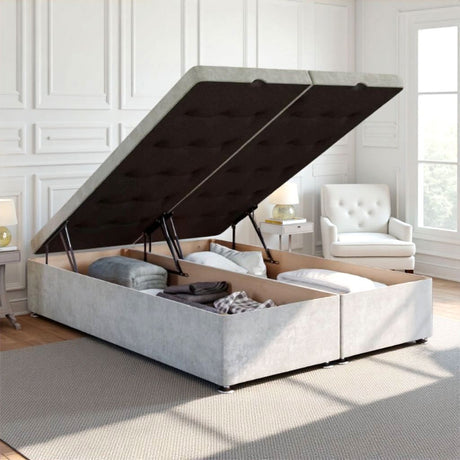
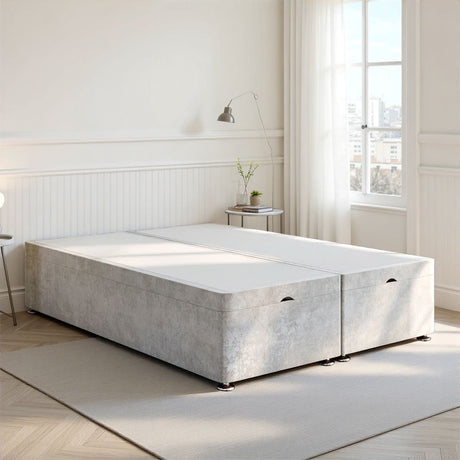
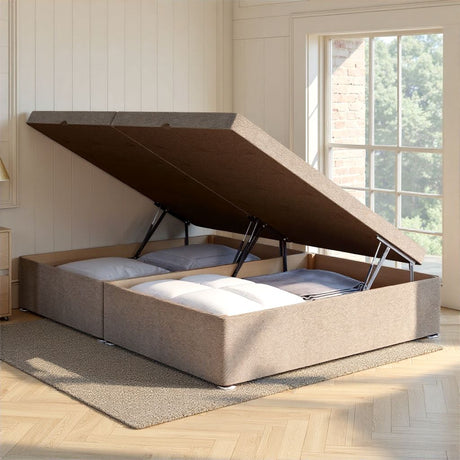
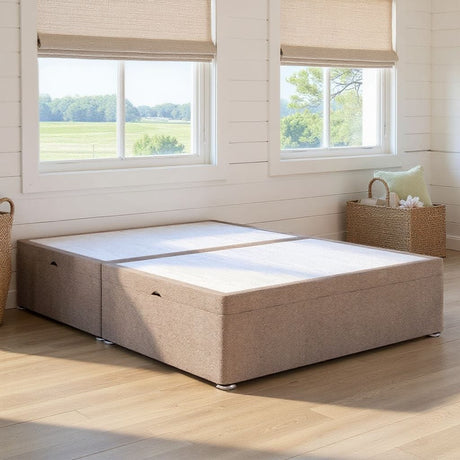
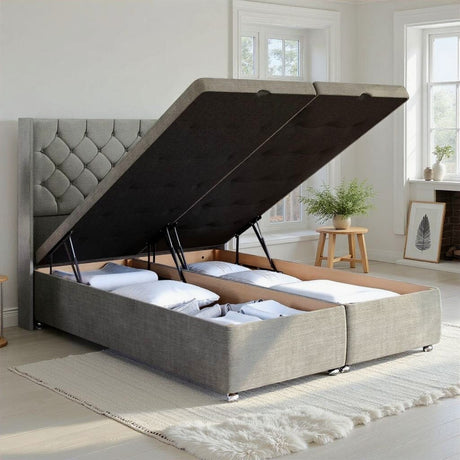
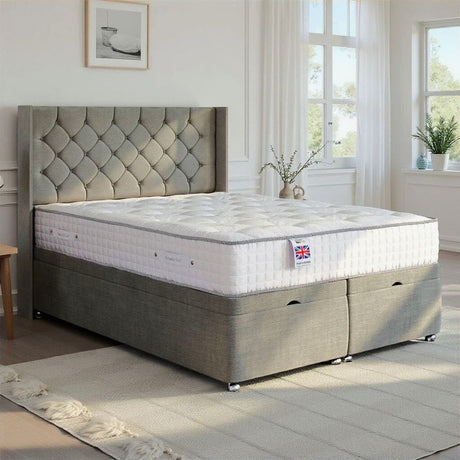
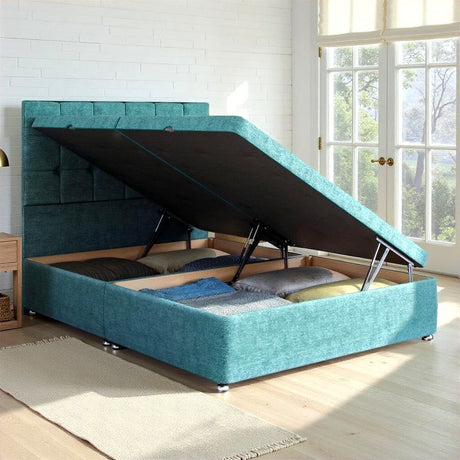
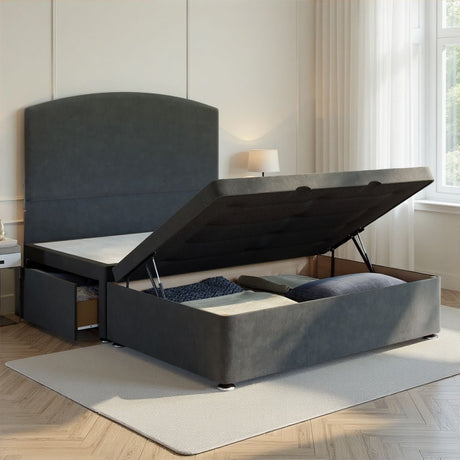
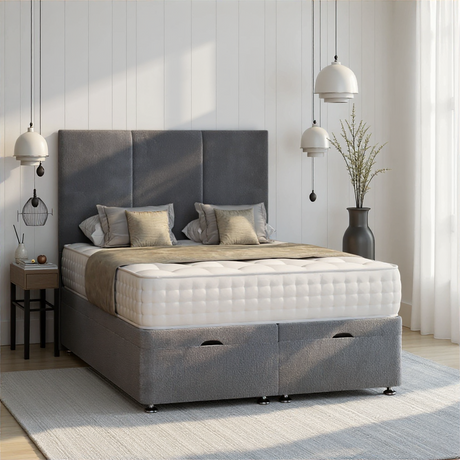
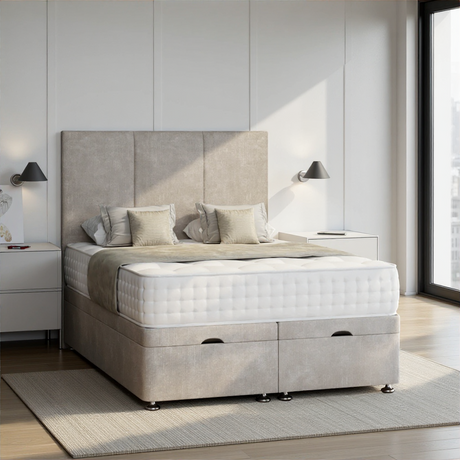
A mattress can only perform as well as what it sits on. A sagging, creaking or uneven base undermines even the best mattress, letting the support flex where it should stay firm. If your base has seen better days, a stable divan base resets the foundation, and an ottoman version adds hidden storage at the same time. Get the base right and your new mattress will support your back the way it's designed to.
Every Divan Base Direct mattress and base is Medi-Endorsed, backed by NHS staff and British-made, so the whole sleep system under you is built to support proper alignment.
Is your current mattress causing your back pain?
Before you buy, check whether your existing mattress is the culprit. Run through these:
- Pain that's worst on waking and eases through the day. This is the clearest sign your sleep surface is the problem, not your posture or activity.
- You sleep better elsewhere, like a hotel, a holiday let, or a friend's spare room.
- Your mattress is 7+ years old. Materials compress and support becomes uneven over time.
- Visible sagging, lumps, or a dip in the middle. Run your hand across it with the sheet off.
- You and your partner roll inward. The centre has compressed.
If two or more apply, your mattress is likely contributing. We go deeper on this in Mattresses, Pain and Mood: The Connection Most People Miss, and on when to replace in Reset Your Sleep, Not Your Life.
It's also worth remembering that poor sleep and pain feed each other. Broken sleep lowers your tolerance for pain and stress, as we cover in How Sleep Affects Mental Health. Fixing the surface you sleep on can break that cycle.
A note on when to see your GP
A supportive mattress can make a real difference to everyday back pain, but it isn't a medical treatment. The NHS advises that most back pain improves with staying active and gentle movement. You should see a GP if your pain is severe, doesn't improve after a few weeks, is the result of an injury, or comes with numbness, tingling or weakness. Use a new mattress as part of the answer, not the whole of it.
Frequently asked questions
What is the best mattress for back pain?
For most adults, a medium-firm mattress offers the best balance of support and pressure relief, the firmness range clinical research links to less back pain and better sleep. Heavier sleepers, back sleepers and those with chronic lower back pain may need a firmer, orthopaedic-level mattress for extra stability.
Is a firm or soft mattress better for lower back pain?
Neither extreme. The evidence favours medium-firm over very firm. Too soft lets the hips sink and the lower back hammock. Too firm forces the spine out of alignment and builds pressure at the hips and shoulders. Medium-firm holds the spine level while cushioning pressure points.
Are orthopaedic mattresses good for back pain?
Yes, for the right person. An orthopaedic mattress provides firmer, more even support that helps keep the spine aligned, well suited to heavier sleepers, back and front sleepers, and chronic lower back pain. It doesn't have to be uncomfortably hard. Good orthopaedic support is structured, not punishing.
What type of mattress is best for back pain, memory foam or pocket sprung?
Both work well, for different reasons. Pocket sprung gives zoned support that keeps the spine level and limits partner disturbance. Memory foam excels at pressure relief for the hips and shoulders, which helps side sleepers. Hybrids combine the two.
How often should I replace my mattress if I have back pain?
Most mattresses need replacing around every 7 years. If yours is older than that, or you wake stiff and sore and improve through the day, it may be adding to your pain.
Can a new mattress cure back pain?
No. A supportive mattress removes one of the most common physical causes of disturbed sleep and morning stiffness, but it isn't a medical treatment. For persistent or severe pain, see your GP.
Find your support
Ready to choose? Start with firmness, then refine by type.
Shop Orthopaedic Mattresses · Shop All Mattresses · Memory Foam · Pocket Sprung · Divan Bases
Sources
- Kovacs, F. M., et al. (2003). Effect of firmness of mattress on chronic non-specific low-back pain: randomised, double-blind, controlled, multicentre trial. The Lancet. thelancet.com
- Caggiari, G., et al. (2021). What type of mattress should be chosen to avoid back pain and improve sleep quality? Review of the literature. Journal of Orthopaedics and Traumatology. PMC
- NHS. Back pain. nhs.uk